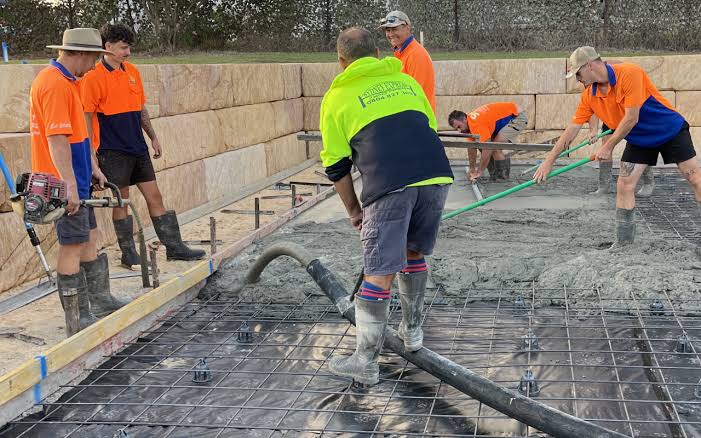
There are only two traditional ways to get the concrete from the mixer to pour: pump it through a hose or move it by wheelbarrow. This can, from where, become a pertinent question. Is the method of transporting concrete affect the final product?
So, the short answer is no, not really. Either method, when handled right in terms of mix, placement, and finishing, can produce high-quality concrete. A larger difference lies in how effectively each method delivers the concrete to its final destination.
How Does Pumped Concrete Work?
Concrete pumps are used to transport fresh concrete through a pipeline (or pipe) or flexible hose under pressure, which is great if the pour is far from the truck, there is restricted access, or lots of concrete needs to be placed fast.
Pumping can offer several advantages:
- Faster placement
- Better access to difficult areas
- Less manual handling
- Delivery is much more consistent during bigger pours
- Reduced disruption to surrounding areas
When the larger pouring is done, like concrete driveways in Cranbourne and other areas, pumping can speed up this process and ease problems with access to the site.
Is Wheelbarrowed Concrete Lower Quality?
Not automatically. Wheelbarrowing, as the name implies, is a very good approach for smaller pours where your ready-mix concrete truck or tumble sack can back up near the job site.
The main challenge is time. The working period of fresh concrete is finite. Placement may take longer than anticipated when workers have to travel across long distances multiple times.
Hitting it can also be an issue. Never jolt concrete, drop it, or handle the mix where the mix separates.
With proper site preparation and an organised crew, having a wheelbarrow in the right place can be just as effective for appropriately scaled projects.
What Actually Determines Concrete Quality?
How you deliver is only a small piece of the puzzle. It is due to several other factors that impact the final output much more.
These include:
- The right concrete mix for a given project
- Proper ground prep and reinforcement
- Correct placement and compaction
- Suitable finishing techniques
- Adequate curing
- Exercises control on water added locally
Too much added water can weaken the ultimate concrete. Weak curing can also raise the risk of cracking on the surface, as well as decreased durability.
When Should You Use Pumping Instead?
Pumping is especially sensible if the site is hard to reach. It is also useful when a larger area needs to be poured within a short time.
Pumping assists smooth delivery to where you need it on landscaping in Cranbourne, allowing concrete to pass around gardens, slopes, fences, or other obstacles without the wheelbarrow needing a clear track for multiple trips.
Though, to work, the pump has been correctly operated. It should also be a pumpable concrete mix.
So, Does Pumping Actually Harm the Mix?
Mix that has been properly designed and then correctly handled should not lose quality simply through pumping. If the concrete is not ideal for pumping or the process is poorly managed, this can lead to problems.
This will be covered in greater depth later, but a similar concept goes for wheelbarrowing. As far as concrete reaching the work area, it could be arriving by bucket or truck (pump), but how you handle that placement can compromise quality.
Indeed, the transport method is only part of the puzzle: attention should be paid to the whole pouring.
Which Method Should You Choose in Your Project?
There is no universal winner. These types of barrels are good for pours that are smaller and easily accessible, so you could possibly use a wheelbarrow! Pumps are generally more effective for much larger jobs or sites that have limited power supply.
Discuss site access for your concrete driveways and volume or placement needs with your contractor before making a decision.
Similarly, landscaping in Cranbourne projects can also benefit from pumping when tight or congested access makes manual delivery impractical.
Ultimately It All Comes Down to Quality of Work
You can use pumped or wheelbarrowed concrete − both are fine. This delivery method should matter but doesn’t have to be the only measuring stick for quality. Concrete is strong and resilient; but, with care − right mix, essential preparation, precise pours, finishing, and complete curing.